Kristallnacht
The Plot Against AmericaKristallnacht, the November 1938 pogrom across Germany, is remembered as a decisive warning of the persecution to come. In the narrator’s account, its destruction and mass arrests expose the gulf between the violence inflicted on German Jews and Charles A. Lindbergh’s continued regard for Adolf Hitler and the Nazi leadership.
Background and Recollection
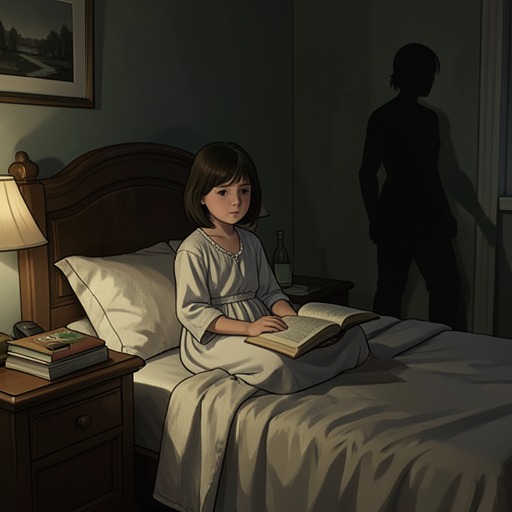
The event enters the narrative through a childhood memory. By the time the narrator began school in 1938, Charles A. Lindbergh’s name already provoked indignation in the Roth household, alongside the Sunday broadcasts of Charles Coughlin, whose antisemitic rhetoric reached a sizable audience during the Depression. The reference places the pogrom within a wider atmosphere of public antisemitism, not as an isolated eruption.
The account calls November 1938 the darkest and most ominous year for European Jews in eighteen centuries. That judgment frames Kristallnacht as a historical rupture: state-backed violence against Jews in Germany made the danger visible on a scale that could no longer be mistaken for ordinary political hostility.
The Pogrom
Across Germany, synagogues were set on fire, and Jewish residences and businesses were destroyed. During the same night, thousands of Jews were forcibly taken from their homes and transported to concentration camps. The scene’s force lies in the range of what was attacked: places of worship, domestic life, livelihoods, and personal freedom were all made vulnerable at once.
The recollection also connects the pogrom to the prior exclusion of Jews from German civic life. Adolf Hitler’s 1935 racial laws had stripped Germany’s Jews of civil, social, and property rights, nullified their citizenship, and forbidden intermarriage with Aryans. Against that background, the November violence appears as an intensification of an already established campaign of persecution.
Lindbergh’s Response and the Event’s Significance
When Charles A. Lindbergh was urged to return the Service Cross of the German Eagle, a gold cross decorated with four swastikas that Hermann Göring had bestowed on behalf of Adolf Hitler, he refused. He argued that publicly surrendering it would constitute an unnecessary insult to the Nazi leadership. Set beside the burning synagogues and the deportation of thousands, that refusal makes his political sympathies concrete: the decoration was not merely an honor he had received, but one he chose to retain after the regime’s violence had become unmistakable.
The narrator remembers Lindbergh as the first famous living American he learned to hate, in contrast to Franklin D. Roosevelt, whom he was taught to love. Kristallnacht thus becomes part of the personal and political history that made Lindbergh’s later Republican nomination feel like a threat to the narrator’s assumed security as an American child. Its significance in the narrative extends beyond the pogrom itself: it helps explain why admiration for Lindbergh could no longer be separated from the fate of Jews under Nazi rule.